


Roman Sebastyanski (2025)
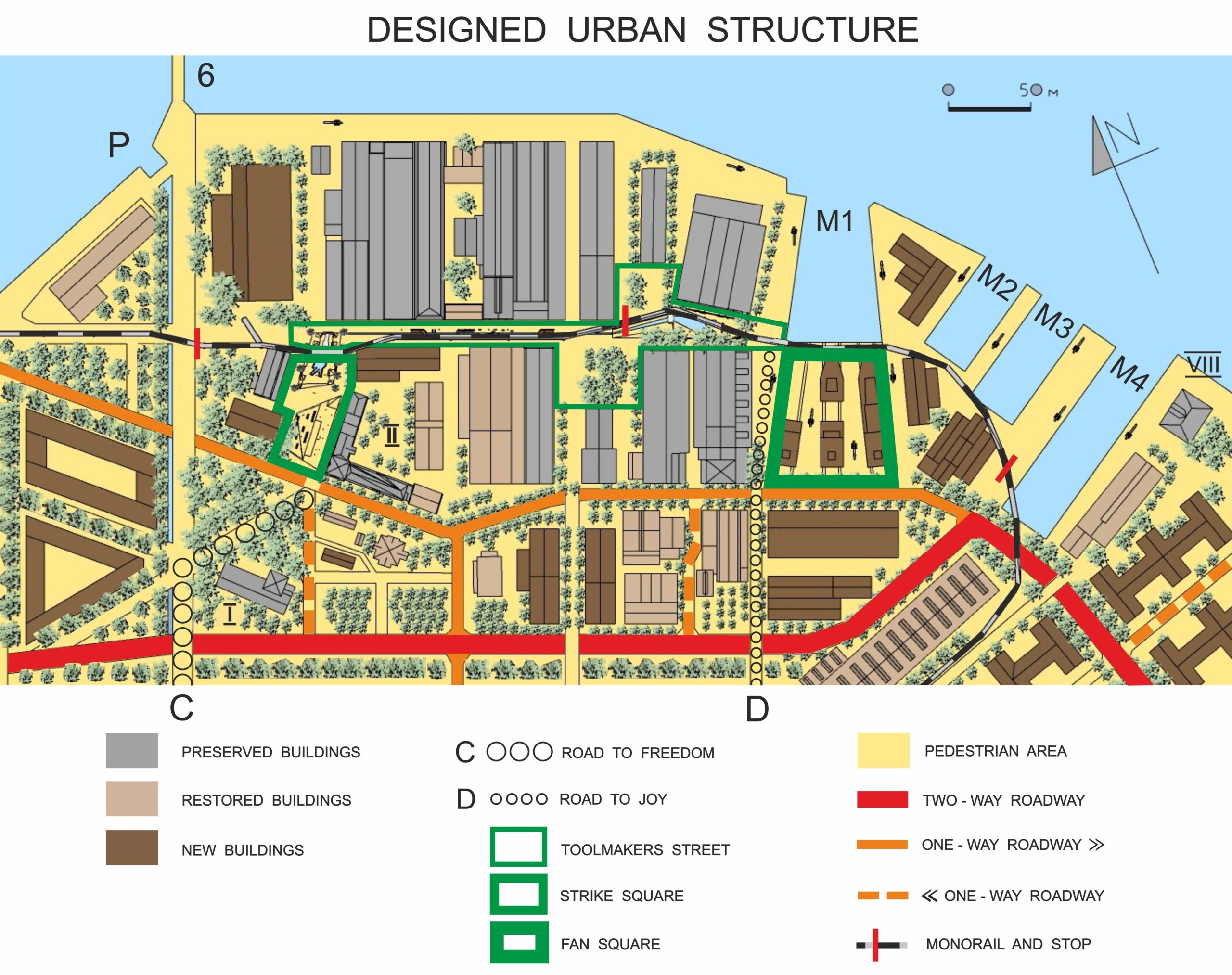
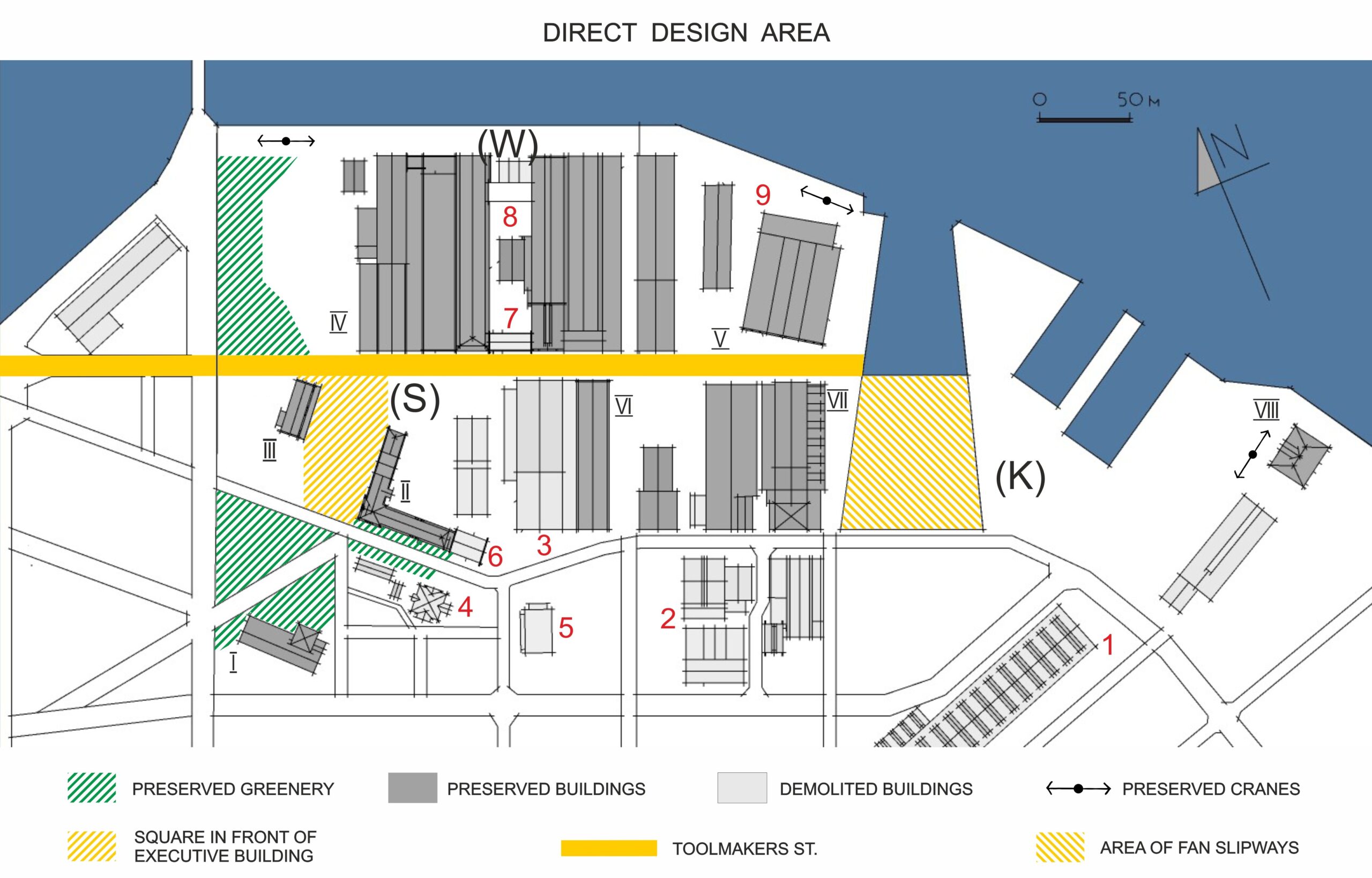
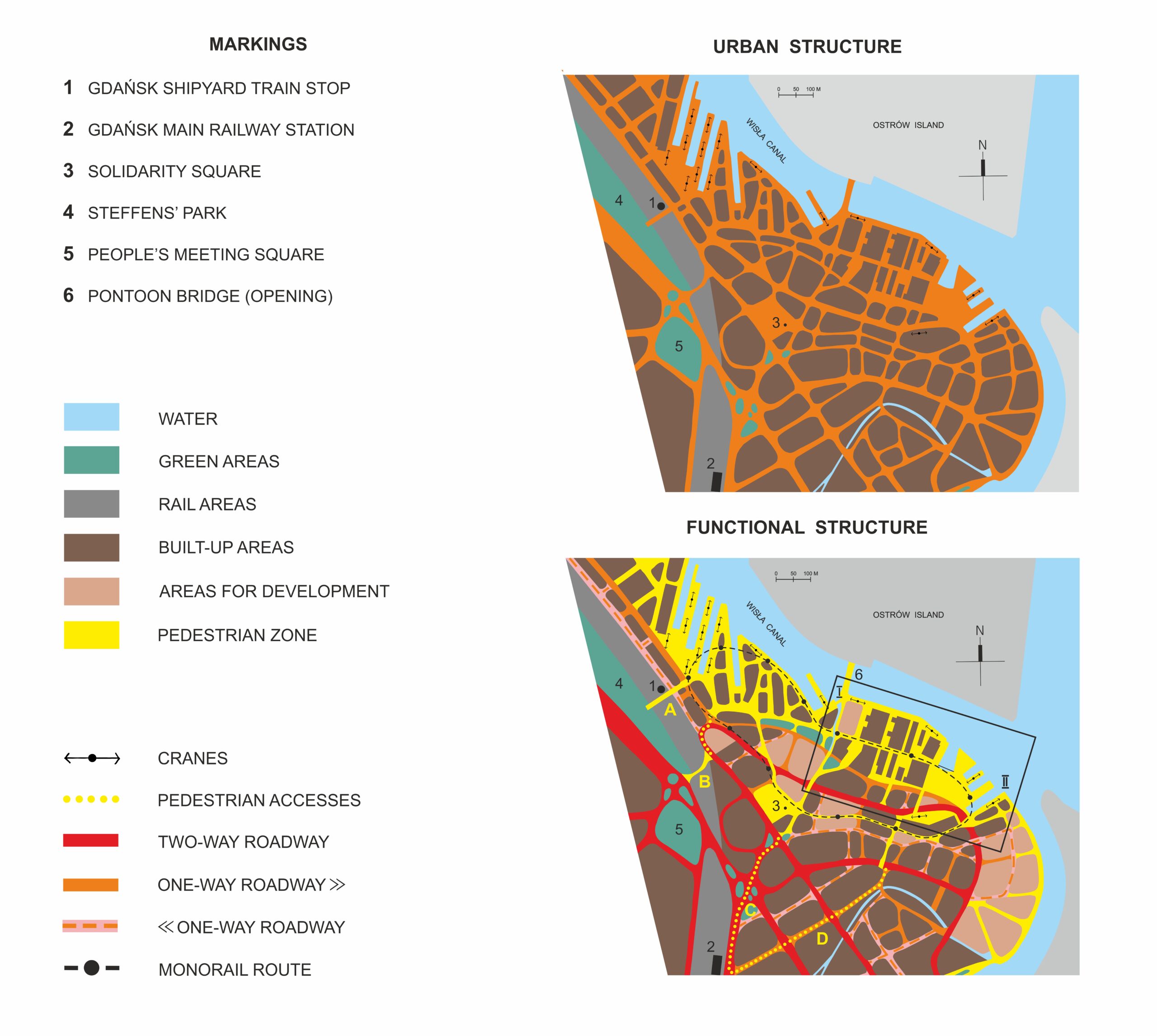
The birthplace of the victorious Solidarity movement, which helped bring down the Soviet communist empire, is now being transformed into a new waterfront district of Gdansk. Will this process preserve the genius loci of this important place on the mental map of the city, Poland, and the world?
Roman Sebastyanski (2025)

Image by Roman Sebastyanski (2025)
Roman Sebastyanski (2025)

Image by Roman Sebastyanski (2025)
Roman Sebastyanski (2025)
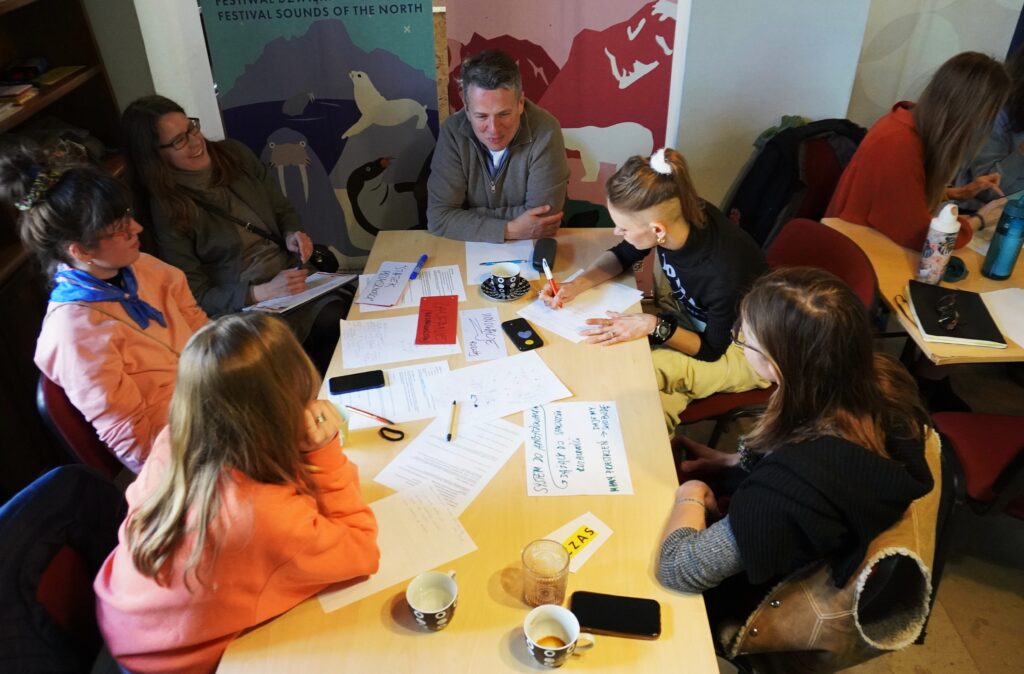
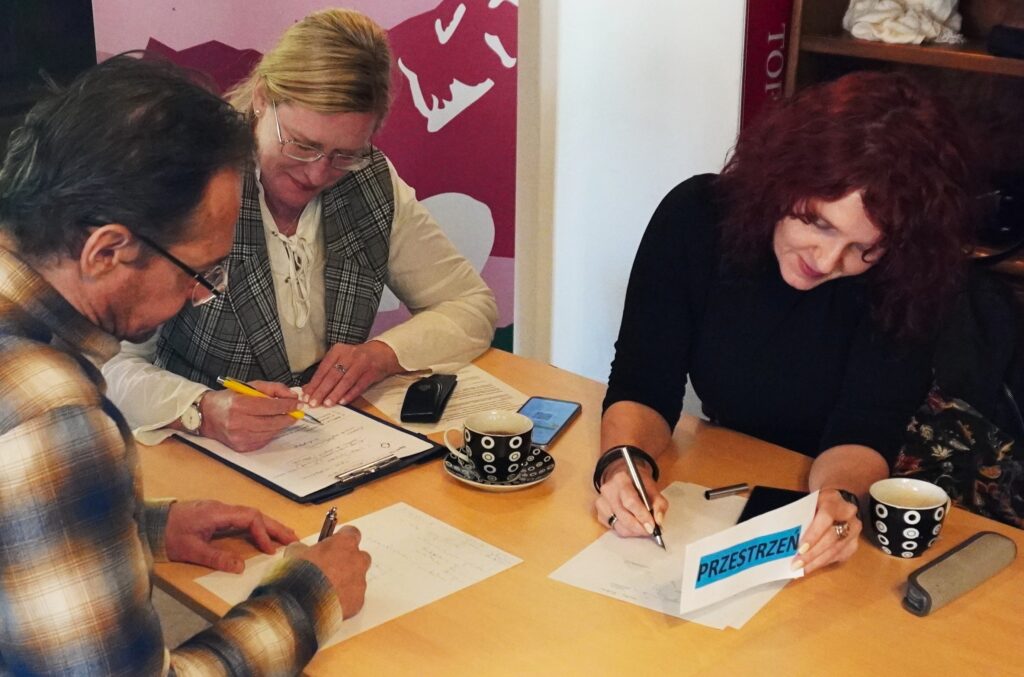
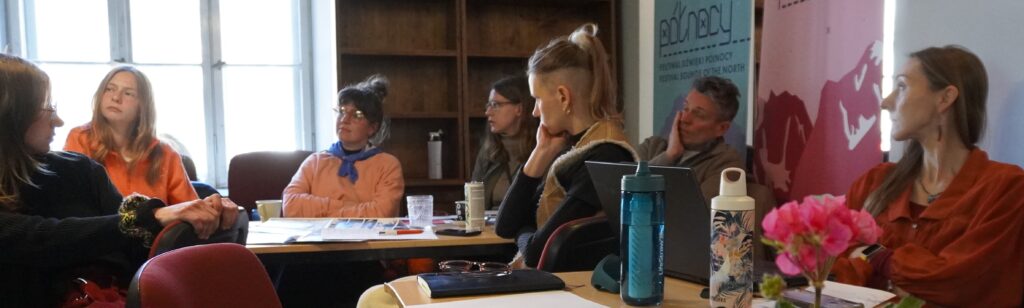
Anna Szykiedans is an architect and photographer based in Otwock, near Warsaw. Her master’s thesis at the Faculty of Architecture of the Warsaw University of Technology focused on the adaptive reuse of one of the structures within the former Warsaw Fortress. In both her architectural practice and photography, she explores the significance of historical contexts. She is particularly interested in the processes that unfold at the intersection of human-made forms and nature – especially gradual decay, spontaneous growth, and their coexistence within evolving spatial environments. Her work also engages with the protection of local historical and spatial values, particularly in the context of adapting and revitalising post-industrial sites. She has explored, among others, the architectural heritage of former industrial areas in Warsaw and Lodz as well as pre-war Polish spa towns. She has also examined the relationship between cities and water, focusing on the riverside districts of Warsaw and other port cities.
She has been visiting the Gdansk Shipyard for many years, finding there a concentration of the themes central to her work. She is particularly drawn to the richness of its historical, architectural, utilitarian, and cultural contexts, as well as to the dynamic processes of transformation that continue to shape the site. For her, the shipyard represents a space at risk of simplification and the erasure of its complex identity. Therefore, it requires careful protection and a thoughtful, responsible vision for the future.
Participation in this project was a natural continuation of her previous work. It was also a form of engagement in the broader discussion on the need for attentive and responsible approaches to spaces that carry collective memory and resist simple, reductive definitions. One of the most challenging aspects of the project was confronting the effects of transformations that have altered the fabric of the site without sufficient respect for its historical and spatial complexity. Another challenge lay in the scale of the undertaking – the vastness of the area, the multiplicity of narratives, and the effort to synthesise them into a clear and concise form of architectural design.
Matylda Wolska is a final-year student at the Faculty of Architecture of the Warsaw University of Technology. Her interests lie at the intersection of architecture, sociology, behavioural neurobiology, and sustainable development. She has gained experience through participation in workshops such as Mood for Wood, Out of Wood and Clay, Designing with the Elements, and Edge-image, as well as through involvement in various academic conferences. She continues to develop her practical skills through work in an architectural studio and as a volunteer.
For her, the Gdansk Shipyard is a place whose history demonstrates the power and agency of social movements. In the context of today’s global challenges, she sees it as a site with the potential to once again become a starting point for meaningful change. Within this project, her aim was to interpret the shipyard through urban and architectural narratives – exploring its history and the relationships it has formed with the residents of Gdansk. This project offered her an opportunity to engage with a mode of working distinct from conventional design approaches. While discussions of value in urban development often focus primarily on economic outcomes, this project emphasised other dimensions – ones that cannot be easily quantified or captured through conventional economic metrics.
Karolina Wolska is an architect and artist. She designs buildings and interiors, and also works in painting. Her practice is driven by a desire to create spaces that are welcoming, open, and conducive to encounter. She approaches tradition as a living substance – not merely a collection of forms or styles, but a realm of memory, emotion, and human gestures. In her architectural work, she seeks to preserve traces that speak of the relationships between people and place – of everyday life, work, and rest. Rather than reconstructing the past, she engages in dialogue with it, creating contemporary spaces that maintain continuity of meaning and retain the spirit of the site.
Based in Warsaw, she has a deep personal connection to the Gdansk Shipyard, which she first encountered many years ago while designing residential interiors there. Over time, she has closely observed and documented the site’s transformation – shaped both by developers and by artists, activists, and enthusiasts. She values encounters and conversations with those who care for the shipyard, study it, and create work inspired by it. For her, it is a place of extraordinary energy and atmosphere, rich in memory and creative freedom. Her decision to participate in this project stemmed from a desire to highlight the reflective character of the post-shipyard landscape. She was especially interested in how the site’s past might be expressed in a subtle way—through water, reflections, colour, and natural vegetation. The shipyard’s former practices and the presence of water – simple yet deeply symbolic – have been a particular source of inspiration in her work.
The most engaging aspect of the process was discovering the history of the place through traces of everyday life. The greatest challenge lay in finding a balance between preserving authenticity and introducing new functions – between retaining the tradition of the site and giving it contemporary meaning and form. For her, this project became an important experience – a lesson in humility toward both history and material. It reaffirmed her belief that architecture can be a form of reflection on memory, as well as a tool for building sustainable and vibrant community.
Anna Niedzielska is a graduate of the Faculty of Architecture at Gdansk University of Technology. Based in neighbouring Gdynia, she runs her own studio, combining the design of buildings and interiors. She embraces challenges, approaching each project as a distinct narrative in which she seeks individual responses to specific contexts and needs. In every project, she strives to introduce an element that is unique and intrinsically connected to its place.
For her, the Gdańsk Shipyard holds exceptional historical and architectural value. Here, physical forms intertwine with intangible meanings and emotional layers. She has found in it what she considers essential to architecture: the functionality and utility of buildings – production halls, warehouses, offices; the durability of natural materials such as brick, concrete, and glass; and the beauty of form, proportion, and detail. These three elements, enriched by the presence of greenery, have created a timeless environment – one that offers a wealth of inspiration and vast potential for the introduction of new urban and architectural structures. It invites the rediscovery and reinterpretation of existing forms, with careful attention to every detail and every plant.
There remains hope that the potential of the Gdansk Shipyard – a place of both great historical significance and everyday labour – will not be diminished by inadequate political, economic, or architectural decisions, but will instead support the creation of a positive and meaningful future for local residents and their visitors.
Roman Sebastyański graduated from the Faculty of Architecture at Gdansk University of Technology. He expanded his expertise in the protection and revitalisation of historic and post-industrial sites during an ICOMOS internship in the United States, where he also attended lectures by Elizabeth Plater-Zyberk on New Urbanism. He further developed his skills in architectural design within historic environments at The Prince of Wales’s Summer School of Architecture in Oxford, Rome, and Villa Lante. Among his tutors Professor Christopher Alexander and Professor Keith Critchlow as well as Leon Krier, Robert Adam and Thierry Despont. He later completed postgraduate master’s studies in Urban Management at Erasmus University Rotterdam, focusing on integrated urban planning that combines heritage protection, ecology, economic and social development, and public participation. His second master’s thesis examined redevelopment strategies for post-industrial waterfronts in Hamburg and Rotterdam, proposing recommendations for the transformation of the Gdansk Shipyard area.
In his planning and design work, he adopts a holistic approach, understanding reality as a dynamic whole – both ecological and social – embedded in a specific spatial context, material and immaterial, and shaped across multiple temporal dimensions: the remembered past, the lived present, and the imagined future. He specialises in participatory planning and design, as well as in the balanced and sustainable revitalisation of urban spaces. His work is inherently interdisciplinary, involving collaboration with specialists from various fields, including artists, whose ability to enrich social communication through symbols and metaphors he particularly values. His method is based on a dialogical and holistic exploration of reality, seeking to harmonise diverse forces – emotions, aspirations, and interests – within appropriate spatial forms, while respecting both tangible and intangible cultural heritage alongside contemporary social needs and ambitions. For many years, a central focus of his engagement has been the Gdansk Shipyard.
As an advisor to the Mayor of Gdansk, he advocated for the public acquisition of the Gdansk Shipyard and its integration into the historic city centre, recognising the strategic importance of the cultural heritage associated with the birth of the Solidarity movement. He initiated the creation of the Gdansk Shipyard Artists’ Colony whose activities – particularly those focused on cultural heritage – played an important role in restoring public interest in the area and fostering a more positive attitude toward its planned transformation.
He conducted a research project with the University of Wolverhampton focusing on the role of culture and memory in the transformation of post-industrial areas in Glasgow, Hamburg, Milan, and Gdansk. He also played an active role in establishing the Polish chapter of INTBAU, becoming a member of its board at the time of its founding. Within this framework, he introduced the issue of cultural heritage protection in the transformation of the former Gdansk Shipyard into the organisation’s agenda. This subject was presented at both national and international conferences, including the INTBAU World Congresses in Krakow (2013) and London (2015).
He initiated the informal civic platform Gdansk–Shipyard Agreement – a collaborative network bringing together individuals and groups who, despite differing visions for the site’s future, committed to the shared goal of protecting its traditions linked to shipbuilding and the Solidarity movement. In 2018, he organised and led a series of presentations and a public debate that resulted in a broadly agreed understanding of the cultural significance of the Gdansk Shipyard, particularly in the context of transforming part of the area into a new urban district. The programme took place in the historic BHP Hall under the patronage of the European Year of Cultural Heritage 2018 and INTBAU Poland. This marked the beginning of the dialogical and participatory process Shipyard Anew, which he led under the patronage of INTBAU Poland and the University of the West of Scotland. The outcome was the first independent, community-based vision and development strategy for the former shipyard area, titled Dreams to Fulfil. As an expert for the Solidarity Heritage Institute, he contributed to incorporating selected social proposals from this document into the official Management Plan – as part of Poland’s nomination dossier for the inscription of the Gdansk Shipyard on the UNESCO World Heritage List in January 2020.
At the turn of April and May 2025, he organised a design charrette focused on the quality of public spaces necessary to support the creation of a sustainable and harmonious eco-community within the former Gdansk Shipyard. Some of the ideas developed during this process were further elaborated in the urban and architectural designs of the Sensitive Shipyard project, supported by an INTBAU Grassroots Grant.
He is currently completing his doctoral research at the University of the West of Scotland, titled The Art of Solidarity. The research explores the role of culture and art in independent processes of generating social knowledge and its application in public action.